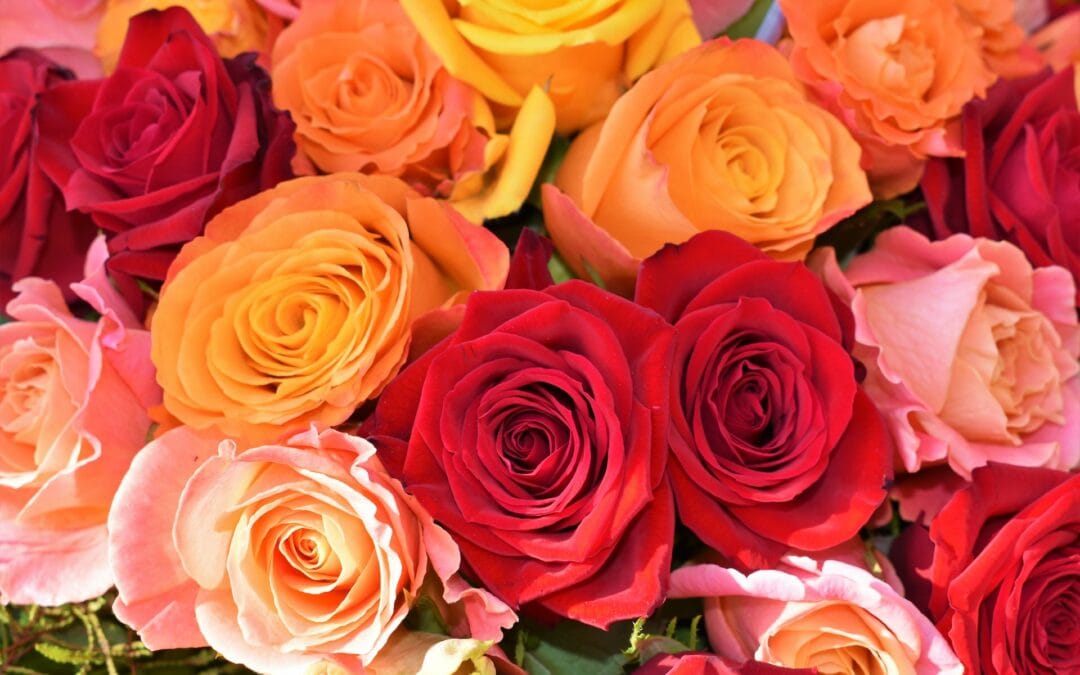
According to the Society of American Florists, more than 250 million roses will be sold on Valentine’s Day in 2018. Still, everyone’s interpretation of roses is different. Regardless, roses share a symbolic meaning all over the world, catering to feelings of love, devotion, and warmth.
Read on to learn more about the rose and why we continue to love this flower today.
The Rise of Roses in Victorian England
Women’s positions in Victorian England were restricted by customs. Within these constraints, learning the language of flowers was a common household practice. Its expressive potential appealed to women more than other domestic arts in such conditions, and some may have sought secret communication and expression.
This practice was popularised by Lady Mary Wortley Montagu, the wife of a British ambassador to Turkey in the 18th century. Lady Montagu, enthralled with the Turkish floral language, wrote a series of letters to England in 1716. She talked about the Turkish custom of linking items with hidden love letters.
Montagu wrote in 1763: “There is no colour, no flower, no weed, no fruit, herb, pebble, or feather that has not a verse belonging to it: and you may quarrel, reproach, or send letters of passion, friendship, or civility, or even of news, without ever inking your fingers,”
In The Language of Flowers: a History, Beverly Seaton believes Montagu misinterpreted the Turkish floral language sélam (Arabic for “hello”). “The worth of the objects is not symbolic, but is tied to syllables that rhyme with the object’s name,” Seaton remarked of sélam. Flowers were uninterested.
The concept was misconstrued by Montagu, but it spread. Charlotte de Latour’s flower language dictionary, Langage des fleurs, was published in France in 1819, a century after Montagu’s discovery. Within thirty years of the publication of Jack Goody’s The Culture of Flowers, nine English editions of the book, which alphabetically defined each flower, were released. Bruno de Latour’s The English Language of Flowers looked at the most common flowers that people buy, trade, and present, from mistletoe’s Christmas significance to the “capricious beauty” of the musk rose.
Roses in Language and Literature
England popularised flowery language writing during the nineteenth century. Kate Greenaway’s 1884 children’s book depicts Latour’s definitions. The craze inspired poetry and prose about the flower’s continuing emotional significance.
Charlotte Elizabeth’s floral biography, Chapters on Flowers (1848), investigated how flowers influenced her life. “I know that, when our glasses were replenished, with orange wine, to drink a happy new-year all round, the Christmas rose which I held in my hand formed a portion of my new-year’s happiness, by no means inconsiderable,” Elizabeth explained.
Rose sales have skyrocketed, prompting botanists to create new roses in Victorian England and France. American Beauty roses were blooming all throughout the northeast. New Jersey presented this cultivar to Queen Victoria. Because of its high price, the American Beauty was dubbed the “millionaire’s rose” in the nineteenth century.
The Victorians popularised the rose’s metaphorical meaning, but they were not the first to do so. This phenomenon is distinguished by floral language. I suppose it derives from a need to explain the incredible cosmos. This urge persists. The majority of people flush when presented with a bunch of roses.
The Rose Flower’s Influence
Feelings of desire and emotional longing are enhanced by the magnificent beauty of the blossom. Nature’s ability to hold our attention is enhanced by romance.
The traditional rose’s colour may also contribute to its enduring appeal. Attraction causes flushing. The Chinese New Year and Christmas add to the colour red’s associations with sexuality and status. The fundamental colour. The rose is beautiful because of its shape, scent, and red colour.
Regardless of Lady Montagu’s misinterpretation, floral meanings have remained consistent throughout history. Flowers have traditionally been associated with romance. At weddings in the fourth and fifth century B.C., Greeks and Romans wore rose garlands.
Conclusion
It must be said: the rose’s allure stems from its beauty. Perhaps this is the main reason why roses are still one of the most popular flowers we can give to our loved ones today. As holidays and special occasions approach, know that you can rely on the rose to make moments even sweeter.
Are you looking for Roses for flower delivery in the UK? Welch makes flower-sending simple and easy. With us, you can order online and click away! Order from us today to experience same-day delivery!